Monday, May 26, 2014

Digestion Song (From Let it Go)

Digestion Song

Lyrics by me, song credit goes to Idina Menzel 


The food you eat goes in your mouth
Passes through the pharynx
and into the esophagus 
it looks like it's ready 

To the stomach where peristalysis occurs
Sphincter keeps it in, or you're screwed. 

Food gets squeezed, food become chyme
down to the small intestine 
Ileum, jujenum, duodenum
Chemical digestion

Let it go, let it go
Can't hold it back anymore
Let it go, Let it go
Don't make that face, it's natural 

Food get's churned
Into small tiny bits
Let the bile come in 
Don't forget the pancreatic juice 

It's almost done with absorption
Making nutrients for you
and the fears like bacteria 
Can't get to me at all

It's time to see what the colon can do
To eleminate the residue
Cecum, colon, and appendix
Absorption

Let it go, Let it go 
From the mouth to rectum
Let it go, let it go 
Where it comes out the rectum


Monday, May 19, 2014

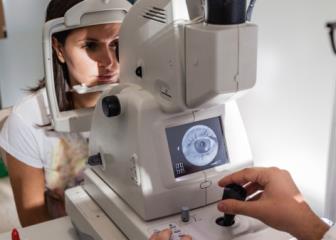
Optometrist

What is an Optometrist:


Optometrists are also called Doctors of Optometry, they are the independent primary healthcare professionals for the eye. Optometrists examine, diagnose, and treat and manage diseases, injuries, and disorders of the visual system, the eye, and associated structures.

What they do: 


Optometrists prescribe medications, low vision rehabilation, vision therapy, spectacle lenses, contact lenses, and perform certain surgical procedures.

They counsel their patients regarding surgical and nonsurgical options that meets their needs.

How to Become One:

Optometrists must complete a Doctor of Optometry degree program and obtain a license to practice in a particular state. Doctor of Optometry programs take 4 years to complete, and most require a bachelor's degree before entering one of these programs. Applicants must have completed at least 3 years of postsecondary education, including coursework in biology, chemisrty, physics, English, and math. Applicants also must take the Optometry Admission Tst and apply to O.D. programs. 

Work Environment:

About 53% of optometrists worked in stand-alone offices of optometry. Optometrists may also work in doctor's offices, retail stores, and outpatient clinics. About 12% are self-employed. Most optometrists work full time. 

Pay: 

The median annual wage for optometrists are about $97,820. The lower 10 percent is less than $52,590, and the top 10% earns more than $184,530. 


References: 

Audiologists Neuro Career Blog


What They Do
Audiologist diagnose and and treat a patient's hearing and balance problems, using advanced technology and procedures.

Duties: 
Audiologist usually does the following:

  • Examine patients who have hearing, balance, or ear related problems. 
  • Assess the results of the examination and diagnose problems
  • Determine and administer treatments
  • Fit and dispense hearing aids 
  • Counseling patients 
  • Keep records of progress of patients 
How to Become an Audiologist 

Audiologists need a doctoral degree and must be licensed in all states. 

The doctoral degree in audiology is a graduate program the typically lasts years. You need a bachelor's degree in any field to enter these programs. Graduate course works also incluse anatomy, physiology, physics, genetics, and normal and abnormal communication development, diagnoses and treatment, pharmacology, and ethics. 


Work Environment
Most audiologists, work in healthcare facilities like hospitals, physican's offices, and audiology clinics. Most audiologists work full time, and some work weekends and evenings to meet patients' needs. ]

Pay:

The median average wage for audiolgists are $69,720

References: http://www.bls.gov/ooh/healthcare/audiologists.htm
http://www.asha.org/Careers/professions/Careers-in-Audiology/

Thursday, May 1, 2014

Disease Blog - Synesthesia

Synesthesia is a perceptual condition of mixed sensations. Synesthesia can involve any of the sense, the most common one being colored letters and numbers.

Diagnoses:
There are no officially established diagnoses, but there are a few diagnoses criteria. Neurologist Richard Cytowic identifies the following criteria:

1. Synesthesia is involuntary and automatic.
2. Synesthetic perceptions are spatially extended, meaning they have a sense of "location".
3. Synesthetic percepts are consistent and generic.
4. Synesthesia is highly memorable.
5. Synesthesia is laden with affect.

Who Has It?
Synesthetes tend to be:

Women: In the us, studies show that 3 times as many women than men are more likely to be synethete, in England, 8 times.


References:
http://www.synesthete.org/
http://faculty.washington.edu/chudler/syne.html

Wednesday, March 12, 2014

Tools We Use to Study the Brain

CAT Scan-
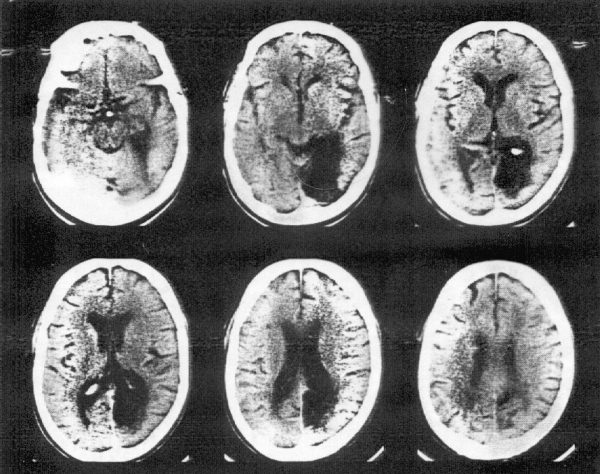
CAT Scans form a full 3-Dimensional model of a patient's insides. Doctors can examine the body one slice at a time to pinpoint specific areas.

Structural Magnetic Resonance Image-
Deals with the structure of the brain and the diagnoses of gross intracranial disease and injury. 

Diffusion Tensor MRI- 
A technology that measures the random motion of hydrogen atoms within water molecules in all 3 dimensions, non-invasively. 


EEG- 
Electroencephalography is the recording of electrical activity along the scalp. An EEG is mainly used to diagnose and manage epilipsy. 

PET Scan-
An imaging test that uses a radioactive substance called a tracer to look for disease in the body. It shows how the brain and it's tissues are working. 
fMRI-
functional neuroimaging procedure using MRI technology that measures brain activity by detecting associated changes in blood flow.

phMRI-
A molecular imaging technique using the natural hemodynamic transduction related to neuro-receptor stimulus.
TMS-
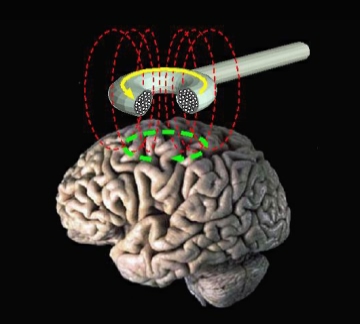
A noninvasive method to cause depolarization or hyperpolarization in the neurons of the brain

Wednesday, March 5, 2014

Mink Dissection Lab

Mink Dissection Lab Labels 
By: Yingshi Huang
Victoria Huizar
Monica Wu
Steven T
 Brachialis 
Origin: Lateral Shaft of humerous - Insertion: Lateral surface of ulna - Action: Flex antebrachium
 Masseter 
Origin: Zygomatic Arch - Insertion: Masseteric fossa of mandible - Action: Adduct mandible
 Latissimus Dorsi 
Origin: Lumbodorsal fascia - Insertion: Proximal humerous w/ teres major - Action: Draw humerus caudad
 Internal Oblique
Origin: Lumbodorsal fascia and crural ligament - Insertion: Aponeurosis to linea alba - Action: Support abdominal viscera, compress abdomen 
 Pectoralis Minor 
Origin: Sternum - Insertion: Proximal humerus - Action: Adduct humerus 
Pectoralis Major
Origin: Sternum - Insertion: Proximal humerous - Action: Adduct humerus
 Temporalis 
Origin: Temporal fossa of pariental, squamosal, and frontal bones - Insertion: Coronoid process of the mandible - Action: Adduct mandible
 Brachioradialis 
Origin: Dorsal border of humerus - Insertion: Styloid process of radius - Action: Supinate paw
 Biceps Brachii 
Origin: Scapula - Insertion: Radius - Action: Flex forearm
Triceps brachii
Origin: Long head = scapula, lateral head = lateral humerus, medial head = posterior humerus - Insertion: Olecranon process of ulna - Action: Extend antebrachium
Flexor Carpi Ulnaris 
Origin: Lateral epicondyle of humerus and ulna - Insertion: Base of fifth metacarpal - Action: Extend digit 5 and wrist 

 Sternomastoideus
Origin: Sternum - Insertion: Mastoid and lambdoidal ridge - Action: Rotate and depress head 
Cleidomastoid
Origin: Clavicle - Insertion: Mastoid and lambdoidal ridge - Action: Rotate and depress head
Back muscles
External Oblique 
Origin: Lumbodorsal fascia and crural ligament - Insertion: Aponeurosis to linea alba - Action: suppor abdominal viscera, compress abdomen

Tuesday, March 4, 2014

Career Blog - Neurologist

A neurologist is a physician that specializes in the feild of neurology. They diagnose and treat diseases, disorders, and conditions that relates to the brain and the nervous system. Neurologists perform neurological examinations on nearly your whole body.

How to become a neurologist
To become a neurologist, you are required to have a M.D. or D.O in addition to an undergraduate college degree:
  • High school diploma
  • 4-year undergraduate degree from an university or college
  • 4-year medical degree from medical school
  • 3 years of residency training in neurology
 Working conditions: 
Most neurologists work in an office that may be in a hospital or a medical office building. They examine patients, review their medical history, run numerous tests, and do some procedures. A neurologist typically works 5 days a week, plus on call duties for emergencies. They work for an average of about 30-40 hours a week.

Annual income: 
The average income of a neurologist is about $281,616.

References:
http://www.healthcommunities.com/brain-nerve-tests/what-is-a-neurologist.shtml
http://healthcareers.about.com/od/physiciancareers/p/How-To-Become-A-Neurologist.htm